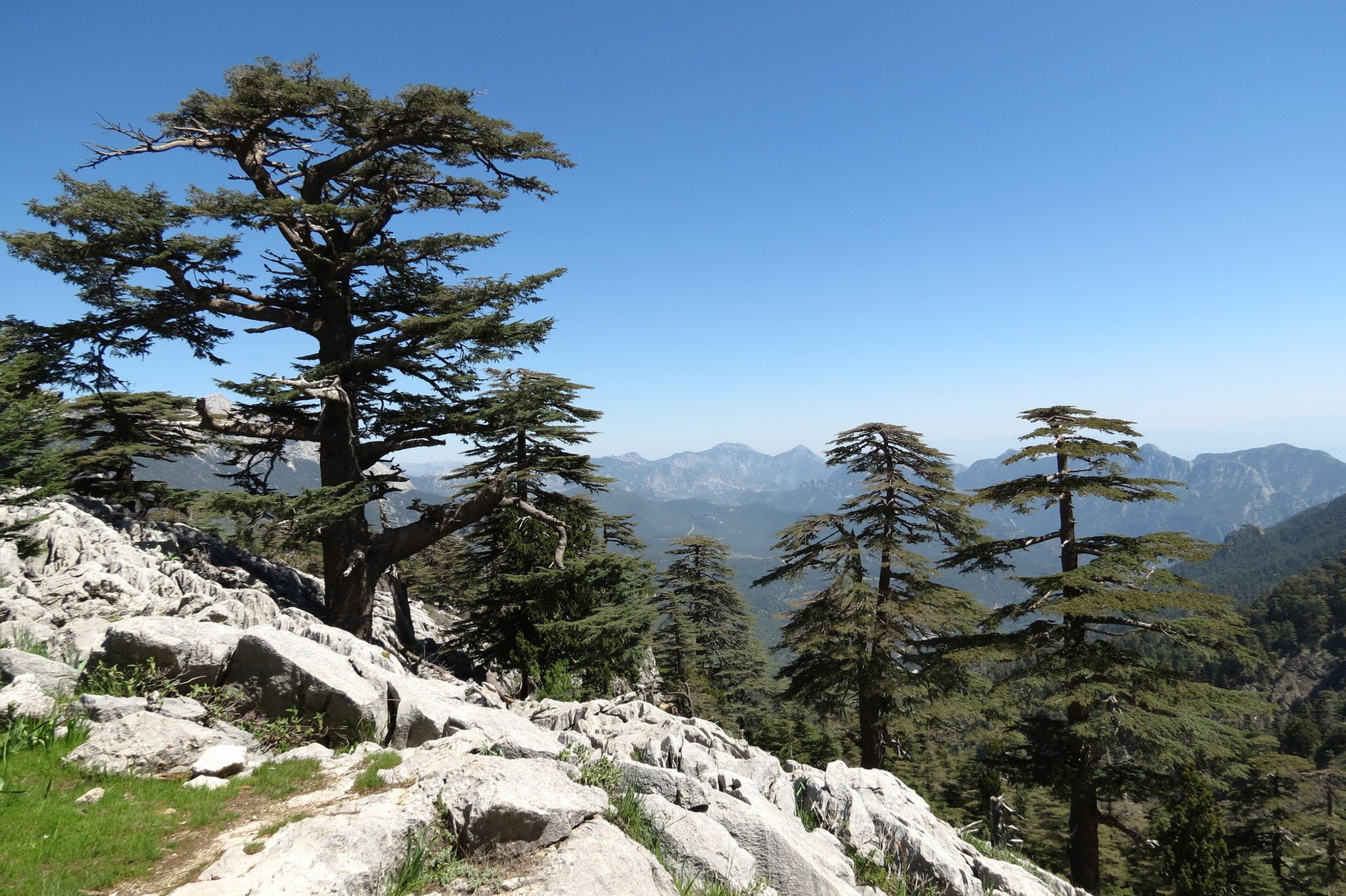

Cedrus libani, commonly known as the cedar of Lebanon, is a majestic evergreen conifer belonging to the Pinaceae family and native to the mountainous regions of the eastern Mediterranean, particularly Lebanon, Syria, and Turkey. Renowned for its grandeur, longevity, and historical significance, this tree has become a powerful symbol of strength and endurance—so much so that it adorns the national flag of Lebanon. Cedrus libani typically grows at high elevations on rocky slopes, where it can reach heights of 30 to 40 meters (100 to 130 feet) with a massive, straight trunk and a broad, flat-topped crown that develops with age. Its dark green, needle-like leaves are arranged in dense clusters, while its large, barrel-shaped cones—green when young and maturing to brown—sit upright on the branches, releasing winged seeds over time. The tree thrives in well-drained, calcareous soils and exhibits remarkable resistance to cold and drought, thanks to its deep root system and durable wood. Historically, cedar of Lebanon has been prized since ancient times for its aromatic, rot-resistant timber, which was used by Phoenicians, Egyptians, and Mesopotamians in shipbuilding, temples, and palaces, including the legendary Temple of Solomon. Beyond its material value, Cedrus libani holds profound cultural and religious importance, frequently mentioned in ancient texts and revered as a sacred and noble tree. Ecologically, it supports mountain ecosystems by providing shelter for wildlife and stabilizing fragile soils. Though once abundant across vast ranges, extensive logging and habitat loss have greatly reduced its populations, prompting ongoing conservation efforts in Lebanon and neighboring regions. Today, Cedrus libani endures not only as a living monument of natural beauty and resilience but also as a symbol of heritage and national pride.


